
Newest FAQs
As the ASTM F3125 specification becomes more prevalent, the issue of configuration may be a source of confusion. The main reason is that in the past, ASTM A325 has been limited a heavy hex head structural bolt only, which implies a structural bolt thread length with Unified National Coarse thread. With the implementation of ASTM F3125, A325... Read more
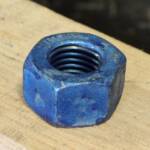
It is often asked why some high strength hex nuts that are supplied with high strength bolts appear to be blue or some other color. This is normally the case with galvanized, high strength, heavy hex nuts and the reason for this is because of the wax lubricant applied to the nuts. According to the... Read more
The short answer is no. The A193 specification does not cover bolts larger than 1-1/2” in diameter for Class 2 materials. However, the reasoning behind this answer requires further explanation. Class 2 materials get their strength through the process of strain hardening (also known as work hardening or cold working). This process causes the grain structure... Read more
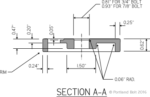
The physical dimensions of shear plates are governed by ASTM D5933. Shear plates come in two sizes, 2-5/8” outside diameter and 4” outside diameter. In several cases, we have been asked the dimensions of everything other than the OD and bolt hole. All of those dimensions are listed in the diagrams below. If your project requires... Read more
Under the new F3125 specification, which now governs A325 structural bolts, there is a supplementary requirement that allows A325 bolts to differ in head geometry and thread length (excluding fully threaded A325s) as required by the customer. When these alternate dimensions are required, the bolts shall be stamped “A325S”, with the “S” indicating special. Under the... Read more

According to ACI 318-05 Appendix D.1, a “Ductile Steel Element” is an element with a tensile test elongation of at least 14 percent and reduction in area of at least 30 percent. The minimum elongation percentage for any diameter of F1554 Grade 55 anchor rod is 21% and the minimum reduction of area percentage is... Read more
Yes, Portland Bolt can rush an order though production. Portland Bolt has what we recognize as “standard lead times.” We believe they are some of the fastest in the industry. These lead times consider the manufacturing processes required to complete an order. For instance, if we are going to manufacture 1” x 36” hot-dip galvanized ASTM... Read more
Yes, Portland Bolt provides domestic fasteners with paperwork for DOT projects all over the US. We routinely have state inspectors from Oregon, Washington, and California in our facility inspecting and tagging orders for our customers. For contractors and steel fabricators in other states, we are able to ship the materials to the jobsite, or to... Read more
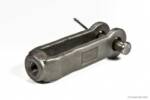
Technically you should not weld to a clevis which is made of C1035 steel and has a carbon content of approximately 0.35%, too high to be normally considered a weldable material. If the engineer has required welding to the clevis, then a special welding procedure should be followed that is outlined in AWS D1.1 or... Read more
While we’ve made it very easy to submit an inquiry online, we don’t have a system that allows a purchase to be made online through a few simple clicks or an online listing of prices. Portland Bolt is a manufacturer of nonstandard construction bolts, which does not lend itself to an ecommerce site. While there... Read more