
Anchor Rods
Portland Bolt has the ability to manufacture anchor rods (also referred to as anchor bolts or foundation bolts), from 1/2″ – 6″ diameter. Anchor rod assemblies are available in a number of ASTM specifications including: F1554 grade 36, 55 & 105, A449 and many others. Anchor plates, pipe sleeves, light fabrication and welding are all performed on site to provide fast delivery at the highest quality. Rods are provided in either plain steel or hot-dip galvanized. All manufacturing processes, including hot-dip galvanizing are completed in our facility.Anchor plates and templates, either square, rectangular, or round, are produced on-site. Our ability to process plate up to 3/4″ plate allows us to meet your special requirements and provide solutions to reduce the overall material cost and lead time.
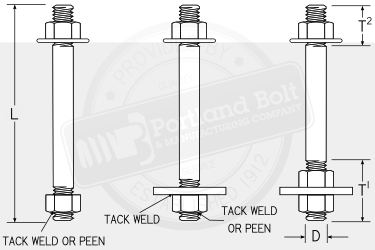
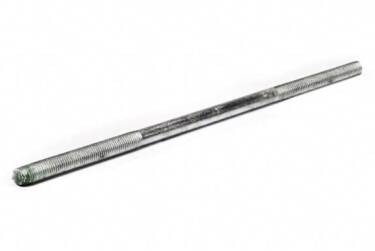
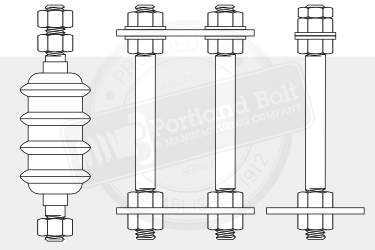



Applications
Anchor rods are vital in various structural applications. They provide stability and strength in projects like bridges, securing railings, slabs, and bearings. In steel buildings, anchor rods attach columns to foundations, ensuring durability. Infrastructure projects such as light rail systems, light poles, traffic signal poles, and highway sign structures also rely on high-strength anchor rods, often galvanized for weather resistance. Additionally, industrial equipment, water storage tanks, and solar structures benefit from large-diameter anchor rods for secure anchoring.

Stock List
Portland Bolt stocks several varying diameters, lengths, and grades of anchor rods. In most cases, our rods are specifically designed for a given project, and repetitive sizes are not used frequently enough to justify a stocking program. The anchor rods Portland Bolt inventories happen to be standard products for various Departments of Transportation throughout the country and are used for applications including light poles, traffic signal poles, and overhead sign structures. If your project requires an anchor rod with dimensions that are identical or similar to a size we stock, we have them available for immediate shipment. Please note that any variation in size or grade from the anchor rods that have been engineered into your structure should be approved by an engineer prior to ordering.
Stock Anchor Rods
| Part Number | Diameter | Length | Grade | Top Thread | Bottom Thread | Finish |
|---|---|---|---|---|---|---|
| 17745 | 1" | 39" | F1554 grade 36 | 6" | 11⁄4" | Galvanized |
| 18497 | 1" | 42" | A449 | 5" | 11⁄4" | Galvanized |
| 18500 | 1" | 54" | F1554 grade 105 | 12" | 4" | Galvanized |
| 18499 | 11⁄4" | 38" | F1554 grade 105 | 6" | 3" | Galvanized |
| 17747 | 11⁄4" | 39" | F1554 grade 36 | 12" | 11⁄2" | Galvanized |
| 18502 | 11⁄4" | 52" | F1554 grade 105 | 18" | 8" | Galvanized |
| 18507 | 11⁄2" | 60" | F1554 grade 105 | 18" | 8" | Galvanized |
| 17971 | 11⁄2" | 54" | F1554 grade 55 | 12" | 51⁄2" | Galvanized |
| 17972 | 13⁄4" | 54" | F1554 grade 55 | 12" | 51⁄2" | Galvanized |
| 17973 | 2" | 54" | F1554 grade 55 | 12" | 51⁄2" | Galvanized |
| 18508 | 2" | 60" | F1554 grade 105 | 18" | 8" | Galvanized |
FAQs
Anchor rods, also known as anchor bolts or foundation bolts, are threaded steel rods embedded in concrete foundations to secure structural and non-structural elements. They are critical components in anchoring steel columns, bridge supports, light poles, traffic signal poles, industrial equipment, and sign structures, ensuring stability and load transfer between the foundation and superstructure.
Anchor rods are used in a wide variety of infrastructure and construction projects, including:
- Steel buildings: Securing columns to concrete foundations
- Transportation infrastructure: Anchoring light poles, traffic signal poles, and overhead sign structures
- Bridges and rail systems: Securing bearings, railings, and support assemblies
- Industrial and utility installations: Anchoring heavy equipment, tanks, and solar structures
Galvanized anchor rods are often used in outdoor or corrosive environments to ensure long-term durability and resistance to weathering.
Portland Bolt manufactures anchor rods from ½″ up to 6″ in diameter, covering a wide range of project requirements. Common ASTM specifications include:
- F1554 Grades 36, 55, and 105
- A449
- A354
Additional custom or project-specific grades upon request
All manufacturing, including cutting, threading, hot-dip galvanizing, light fabrication, and welding, is performed in-house for maximum quality control and faster turnaround.
Anchor rods can be supplied in plain steel or hot-dip galvanized finishes, depending on environmental exposure and corrosion protection needs. Stainless steel anchor rods can be manufactured to your project specifications.
Hot-dip galvanizing is performed on-site at two of Portland Bolt’s facilities, ensuring uniform coating quality and compliance with ASTM galvanizing standards.
Portland Bolt manufactures square, rectangular, or round anchor plates, pipe sleeves, and custom-welded assemblies as part of its in-house fabrication services. The facility can process up to 1-1/2″-thick plate, allowing complete control over material dimensions and alignment with engineered requirements. Custom fabrication helps reduce material costs and ensure compatibility with project-specific drawings.
While anchor rods are primarily manufactured to order, Portland Bolt maintains a limited stock of commonly used sizes and grades, especially those meeting state Department of Transportation (DOT) standards.
Stock anchor rods are typically used in applications such as light poles, traffic signal poles, and overhead sign structures.
However, because anchor rods are often engineered to specific designs, any substitutions in size, grade, or configuration should be reviewed and approved by the engineer of record prior to use.
In many cases, anchor rods and anchor bolts refer to the same type of fastener. However:
- “Anchor rods” usually describes straight, threaded rods used with separate nuts and washers.
- “Anchor bolts” may refer to headed, bent, or welded configurations (e.g., hex, L-shaped, or 90° bend).
Portland Bolt manufactures all major styles – including headed, bent, and threaded anchor bolts – from ½″ to 6″ diameter to meet diverse project needs.
There is no universal standard for anchor rod thread lengths. These are determined by project design or engineering drawings. In general:
Top Threads:
- Determined by the projection above the concrete plus roughly 1″ of additional thread for adjustment.
- When the projection is unknown, calculate the top thread length by adding:
- Thickness of nuts, washers, and base plate
- 1″–2″ additional thread for installation flexibility
- The top threads are typically longer than the bottom threads.
Bottom Threads:
- Usually not required if the anchor is a bent, headed, or swedged configuration.
- If bottom threads are included, their length depends on:
- The thickness of embedded materials
- Additional allowance for welding, peening, or adjustment
In most cases, the engineer specifies the required top and bottom thread lengths on the structural drawings. When thread details are not provided, installers and fabricators can estimate using the guidelines above, considering hardware thickness and field conditions.
To aid identification, F1554 anchor rods that project from concrete are color-coded or permanently marked with the grade symbol and manufacturer’s identifier, helping inspectors and installers verify compliance.
Yes. Portland Bolt can supply complete anchor rod assemblies including:
- Anchor plates (square, round, or rectangular)
- Templates
- Hex nuts and washers
- Hot-dip galvanizing
- Pipe sleeves
All assemblies are fabricated and finished in-house, ensuring dimensional accuracy and compliance with project specifications.
Absolutely. With in-house threading, welding, and galvanizing capabilities, Portland Bolt routinely produces large-diameter anchor rods up to 5″ and extended lengths for heavy-duty applications such as bridges, towers, and industrial foundations. Custom manufacturing ensures both mechanical integrity and compliance with ASTM or project-specific standards.
Before ordering, confirm the following, based on your plans and specifications:
- Correct quantity, diameter, length, and grade
- Proper thread length and projection
- Nuts, washers, or anchor plates
- Required finish (plain or galvanized)
- Compliance with project drawings or DOT specifications
Confirming these details in advance prevents delays, material mismatches, and costly field modifications.