
Shear Plates
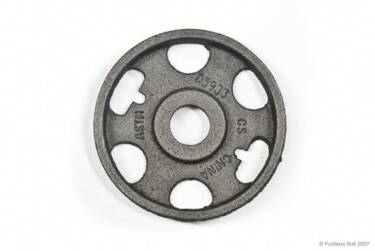
In May of 2013, we began providing our exclusive line of “Portland Bolt” branded shear plates. Cleveland Steel Specialty Company ceased business operations in 2020, and we purchased their remaining domestic shear plate inventory making us the premier supplier of shear plates, installation tools, and other timber connectors.Shear plates are available in two sizes: 2-5/8 inch shear plates are used is lighter timbers while 4 inch shear plates are used in heavy timber construction. The dimensional chart below provides minimum lumber dimensions.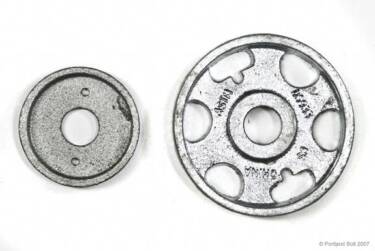


Applications
The shear plate wood connector is intended primarily for wood-to-steel or wood-to-wood connections in demountable structures when used in pairs. Shear plates spread the load and reduce the number of bolts required.
The shear plates are placed in precut daps created by a dapping tool and are completely embedded in the timber when in position, being flush with the surface of the timber. In some cases where field connections of preassembled sections are to take place, two shear plates used in place of a split ring will enable the members to slide easily into position greatly reducing the labor required for the connection. Shear plates are used to attach columns to footings through steel straps, in connection with steel gusset plates, for transferring loads from steel heel straps in bowstring trusses and for other steel to wood connection in timber structures.

Stock List
Dimensions
| Outside Diameter | Depth | Bolt Diameter | Lumber Minimum Dimension | Weight (lbs.) Per 100 Pieces | Part Numbers | ||||
|---|---|---|---|---|---|---|---|---|---|
| Plate in One Face | Plate In Both Faces | Plain | Galvanized | ||||||
| 25⁄8 | .42 | 3⁄4 | 15⁄8 x 35⁄8 | 15⁄8 x 35⁄8 | 31 | 12346 | 12347 | ||
| 4 | .62 | 3⁄4 | 15⁄8 x 51⁄2 | 13⁄4 x 51⁄2 | 89 | 12404 | 12405 | ||
| 4 | .62 | 7⁄8 | 15⁄8 x 51⁄2 | 13⁄4 x 51⁄2 | 89 | 12406 | 12407 | ||
Dimensions per ASTM D5933 | |||||||||
FAQs
A shear plate is a circular, recessed steel connector designed to reinforce wood-to-wood or wood-to-steel joints by increasing load transfer and reducing the number of bolts required in a connection. When embedded into the timber, shear plates provide a flush, high-strength bearing surface that distributes forces evenly and prevents crushing or splitting of the wood. They are frequently used in heavy timber structures, bridges, trusses, and other large-scale wood assemblies where structural integrity and disassembly potential are key.
Shear plates are used primarily in demountable timber and hybrid structures to enhance the performance of mechanical connections. They allow wood-to-steel and wood-to-wood joints to resist high shear loads while minimizing the number of bolts needed. Typical applications include:
- Attaching timber columns to concrete footings through steel straps
- Connecting timber members with steel gusset plates
- Transferring loads through heel straps in bowstring trusses
- Reinforcing bridge, marine, and industrial timber structures
By embedding the plate within the wood, the connection remains both flush and concealed, allowing for both wood-to-wood and wood-to-steel connections.
Shear plates are available in two standard sizes, as defined by ASTM D5933:
- 2-5/8″ diameter – for use in lighter timbers or smaller structural members
- 4″ diameter – for use in heavy timber construction or high-load applications
The size selected typically depends on bolt diameter, wood thickness, and connection type. Portland Bolt supplies both sizes in plain and hot-dip galvanized finishes, ensuring long-term durability even in outdoor or marine environments.
Portland Bolt’s shear plates are manufactured in accordance with ASTM A47 Grade 32510, the standard for malleable cast iron, and ASTM D5933, which governs the physical and dimensional requirements for shear plate connectors. These specifications ensure consistent performance, durability, and dimensional compatibility with standardized installation tools.
Shear plates function by embedding into pre-cut recesses (daps) within the wood surface, allowing the plate to bear directly against the connected material. When a bolt passes through the center, the plate helps transfer shear forces between the connected elements while reducing localized stress on the wood fibers. By spreading the load across a larger area, shear plates increase the connection’s strength and stiffness and prevent premature crushing or bolt elongation under load.
Shear plates must be installed using a specialized dapping tool that creates clean, circular grooves in the wood face concentric with the bolt hole. The process involves the following general steps:
- Drill the bolt hole – typically 13/16″ for a 3/4″ bolt or 15/16″ for a 7/8″ bolt.
- Use the dapping tool – consisting of a cutter head and pilot bit – to cut the circular groove (or “dap”) around the hole.
- Adjust the groove depth – using the cap screws on the cutter head to ensure the shear plate sits flush with the timber surface.
- Insert the shear plate – checking fit to confirm that the plate is fully embedded and level.
- Assemble the connection – tightening the bolt through the pre-drilled hole once the plate(s) are seated correctly.
Portland Bolt supplies complete Dapping Tool Kits that include the pilot bit, cutter head, and Allen wrench required for proper installation. Tools are shipped in a storage block which serves as a blade depth gauge. Using the correct tooling is critical to ensure the connection performs as designed.
A dapping tool is required to ensure that the shear plate is seated at the proper depth, alignment, and concentricity with the bolt hole. Improvised methods can result in uneven seating, misalignment, or insufficient depth, leading to poor load transfer or premature failure. The dapping tool guarantees that the shear plate sits flush with the timber surface, allowing for uniform force distribution and full engagement of the plate.
Portland Bolt’s specialized dapping tools are compatible with both drill presses and heavy-duty hand drills and are available for purchase or as part of a kit.
The 2-5/8″ shear plate is typically used for smaller members or light timber assemblies, providing adequate strength where loading is moderate. The 4″ shear plate is designed for heavy timber applications, such as bridge trusses, large columns, and marine structures, where connections experience higher loads. The larger diameter plate provides greater load distribution and shear resistance. Minimum timber thickness requirements vary between sizes to ensure sufficient embedment depth and edge distance.
In certain field applications where preassembled timber sections must be joined onsite, pairs of shear plates can be used instead of a split ring connector. The advantage of this approach is that shear plates allow the members to slide together easily during assembly while still providing comparable load-carrying capacity. This method greatly reduces labor time and simplifies alignment in demountable or prefabricated structures.
Portland Bolt supplies shear plates in both plain steel and hot-dip galvanized finishes.
- Plain finish plates are ideal for interior or protected environments where corrosion is not a concern.
- Hot-dip galvanized plates are recommended for exterior, marine, or high-moisture applications to provide enhanced corrosion resistance and long service life.
All galvanizing is performed in-house under strict process control to ensure uniform coating and consistent quality.
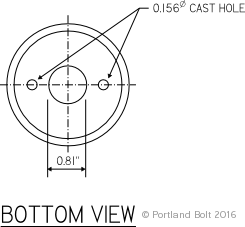
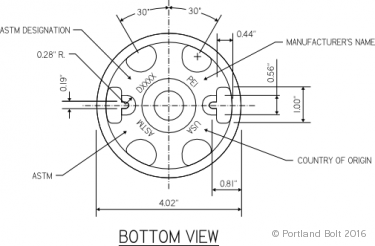
The physical dimensions of shear plates, including outer diameter, thickness, bolt hole size, and groove depth, are governed by ASTM D5933.
- 2-5/8″ plates are used with 3/4″ diameter bolts.
- 4″ plates are used with 3/4″ or 7/8″ diameter bolts.
Detailed dimensional charts and diagrams are available from Portland Bolt to assist in verifying compatibility with your project’s lumber and bolt specifications.
For optimal performance, shear plates should always be installed using:
- Proper dapping tools to create uniform grooves
- Clean, straight-grained timber without knots or defects in the connection zone
- Correct bolt diameter and torque according to engineering design
It is also recommended to test-fit each shear plate before final assembly to confirm that it sits flush with the surface. Improper embedment depth or misalignment can lead to reduced shear capacity or uneven load transfer.
The design and performance of shear plates are covered under ASTM D5933, which specifies dimensional tolerances and testing requirements for shear plate connectors in wood construction. Material properties are governed by ASTM A47 Grade 32510, which defines requirements for malleable cast iron. For engineered wood structures, connection design parameters are typically established according to the National Design Specification (NDS) for Wood Construction.