
Newest FAQs
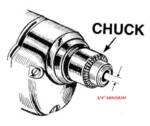
Both the shear plate dapping tool and the split ring grooving tool require a heavy duty drill or drill press with a 3/4” minimum chuck size. Many of the small, cordless drills on the market only have a 3/8” or 1/2” chuck and would not be able to open their chuck wide enough to accept... Read more
Your page says A320 requires bolts or cap screws to have heavy hex heads. I have the 2003 edition of A320 and can’t find that requirement. Where is that requirement stated? The ASTM A320 specification does not specifically address the physical dimensions of headed bolts. However, it does refer you to ASTM A962 for some... Read more
It not uncommon for us to get requests or for bolt configurations that don’t match the specifications. Anchor bolts called out as headed Grade 8 bolts are only available with a hex head. From your description ASTM A354 BD would be the correct fastener. This specification has mechanical properties that are very similar to SAE... Read more
We do not recommend allowing this type of substitution without approval from the Engineer of Record. Based on performing mechanical tests to the ASTM specification F606 which covers the testing of construction fasteners, a rod with a nut would typically not produce the same strength characteristics as a bolt with a forged head. Under F606,... Read more
Engineers often design anchor bolts in one of four common configurations. We see anchor bolts with forged heads, 90 degree bends, straight rods often with anchor plates on the bottom, and swedged rods. Engineers will design a structure using different grades and configurations based on the size, weight and design of a structure, wind forces,... Read more
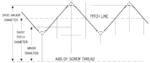
Portland Bolt forms threads using two methods: cut threading and roll threading. Cut threading is a process that removes steel to form the threads. The roll threading method we utilize starts with reduced body pitch diameter steel. To make a one inch bolt we would use .912 inch round bar. This steel is forced between... Read more
Generally speaking, bolts over 1-1/2″ in diameter should be designed in 1/4″ increments, regardless of grade. While it is possible to manufacture bolts in 1/8″ increments (i.e. 2-3/8″), there are several reasons why you would want to avoid it. Steel Availability Steel round bar used to manufacture bolts is not readily available in 1/8″ increments over... Read more
The term “lock washer” can include a huge variety of different products used in many different applications that often are very specific and can include many different grades, materials and purposes. When our customers refer to a lock washer, we assume they are referencing a “split lock washer” that is a generic lock washer that... Read more

In order to answer this question, we must first define what conflict minerals are. Any natural resource that is mined in a conflict zone and sold to perpetuate fighting is defined as a conflict resource. The conflict minerals that are most commonly extracted are cassiterite (used for tin), wolframite (used for tungsten), coltan (used for... Read more
Portland Bolt is unaware of any information that addresses this question. Plastic sleeves seem to be a “gray area” due to the fact that no specifications cover them or design guides mention them. AISC Design Guide 1, 2nd Edition, Base Plate And Anchor Rod Design, Page 49, does address steel sleeves and has information on... Read more