Shanna's FAQs

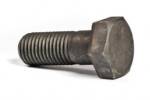
The short answer is yes. Here is why: When bolts go through the hot-dip galvanizing process the zinc leaves an extra layer coating the bolt. This extra layer of zinc adds 0.002” – 0.006” of thickness to the bolt. When galvanized nuts are manufactured their threads are tapped oversize to accommodate for the thicker material. ... Read more
The length of a tie rod assembly is typically measured from pin to pin, which is the centerline of the pin of one clevis to the centerline of the pin of the opposing clevis. However, when you are looking to order a tie rod assembly you will need to know additional dimensions. What information is... Read more
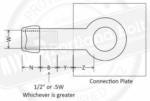
Lag screws are used in wood and are installed by rotating the head to screw the lag screw into the wood. Since lag screws are designed to drive into the wood instead of being secured with a nut they have deeper and sharper threads than your average hex-headed bolt which typically uses UNC (national course)... Read more
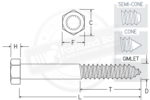
The short answer is no, they don’t need to be galvanized but they can be. In some cases, they should be. You’ll want to consider galvanized anchor bolts if they are going to be in a corrosive environment or exposed to the weather. Galvanizing anchor bolts provide corrosion resistance to the bolt. Instances where it... Read more
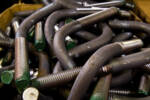
The short answer is that F3125 Grade A490 heavy hex structural bolts have higher strength requirements than A325 heavy hex structural bolts. A325 bolts have a minimum tensile strength of 120ksi while A490 bolts have a tensile strength range of 150-173ksi. In addition, there are a few other differences shown below. Coatings A325 structural bolts... Read more