
Technical FAQs

Anchor Bolts Installation
How do you torque anchor bolts?When tightening a nut onto anchor bolts, it is important to follow procedures to ensure proper installation and secure fastening. Here is a general outline: Clean the threads of any debris or rust using a wire brush or similar tool. If specified apply wax to threads and bearing surfaces. Place the nut on the anchor bolt and hand-tighten... Read more
Tie Rod Measurement
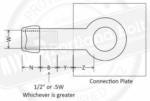
How is a Tie Rod Assembly Measured?The length of a tie rod assembly is typically measured from pin to pin, which is the centerline of the pin of one clevis to the centerline of the pin of the opposing clevis. However, when you are looking to order a tie rod assembly you will need to know additional dimensions. What information is... Read more
Your Best Lag Screw Order
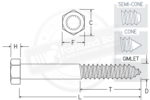
What should you know about Lag Screws before ordering?Lag screws are used in wood and are installed by rotating the head to screw the lag screw into the wood. Since lag screws are designed to drive into the wood instead of being secured with a nut they have deeper and sharper threads than your average hex-headed bolt which typically uses UNC (national course)... Read more
Anchor Rods & Bolts
How are Threaded Anchor Rods Used in Concrete?There are a variety of configurations of anchor bolts and anchor rods, such as headed anchor bolts, bent anchor bolts, thread each-end rods, and fully threaded rods. When an anchor rod is specified, it is most likely a rod with threads on each end or a fully threaded rod. If the rod has threads on... Read more
Light Pole Anchor Bolts
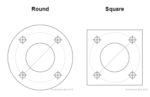
What Sized Anchor Bolts are Used for Light Poles?Anchor bolts for light poles are configured in several ways. Ordering them can often be confusing and this FAQ will attempt to simplify that process. Light poles each have specific designs and the anchor bolts are designed to the exact specifications of each light pole to match the strength properties and pullout resistance needed to... Read more
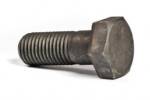
ASTM A490 vs. ASTM A325 Bolts
Is There a Difference Between ASTM A490 and ASTM A325 Bolts?The short answer is that F3125 Grade A490 heavy hex structural bolts have higher strength requirements than A325 heavy hex structural bolts. A325 bolts have a minimum tensile strength of 120ksi while A490 bolts have a tensile strength range of 150-173ksi. In addition, there are a few other differences shown below. Coatings A325 structural bolts... Read more
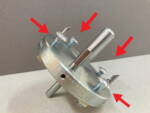
Split Ring & Shear Plate Timber Groove Depth
Can you adjust the depth of the groove for a Split Ring Connector or Shear Plate Timber Connector?In short, yes. The grooving tool for installing split rings and the dapping tool for installing shear plates allow the depth of the cut to be adjusted. Both tools have either two or four carriage bolts that set the depth of the groove cut into the wood. The headed ends of the bolts project from... Read more
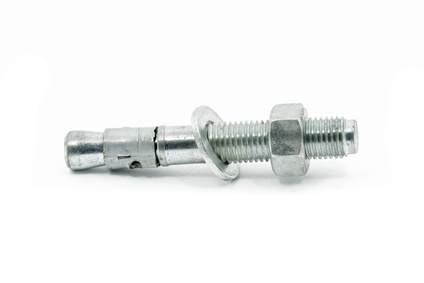
Cast-in-Place vs. Post-Installed Anchors
What is the difference between cast-in-place anchors and post-installed anchors?Anchor bolts come in several different configurations, such as 90-degree bent, headed, rods with threads on each end, or fully threaded rods to name a few. Anchor bolts can be made in many grades. shapes and sizes, however, there are two distinct categories of anchor bolts: post-installed anchors and cast-in-place anchors. Although both types essentially... Read more
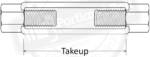
Tie Rod Adjustability
How much adjustability does a tie rod assembly provide?When Portland Bolt calculates the length of the rods in a tie rod using the pin-to-pin length of the assembly, we assume that the rods will be threaded into the clevises the full length of the female threaded nut component (Dimension ‘N’ in the drawing below) plus an additional length equal to ½” or half... Read more
All Thread Rod in Tie Rod Assemblies
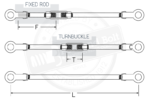
Can I use all thread rod for tie rod assemblies?Yes and No. Traditionally, tie rod assemblies are used with thread each end rods and two clevises. They are designed to have a left-hand threaded end within the assembly in order to draw it tight. All thread rod possesses continuous right-hand thread from one end of the rod to the other. Here are the ways... Read more